How to Save Recipes from Zalo (Chats, Groups & Official Accounts)
Your mẹ’s phở recipe is buried under 3,000 Zalo messages and a wall of reaction stickers.
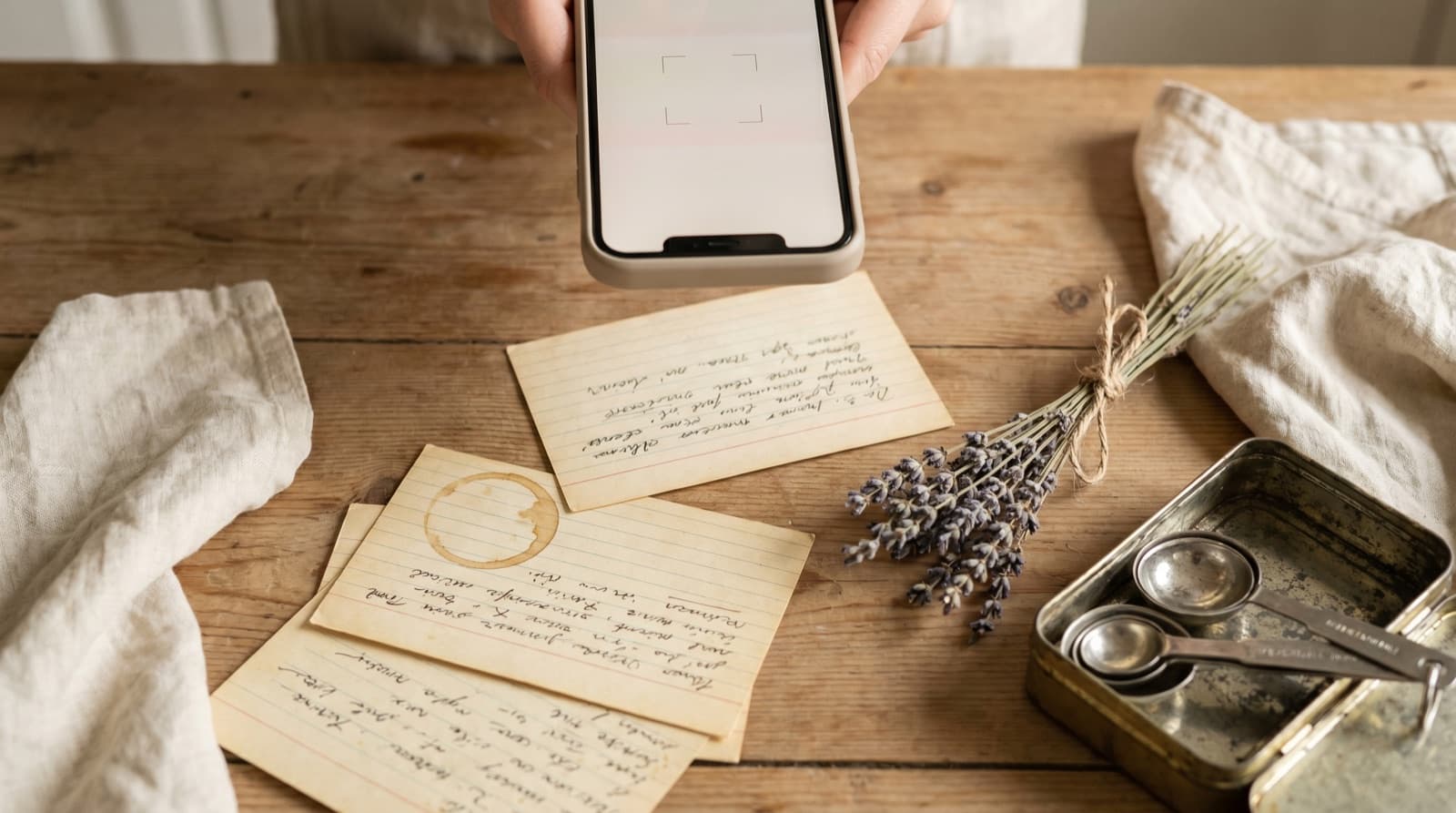
Zalo is Vietnam’s dominant messaging app, built by VNG Corporation and used by over 77 million people — roughly three-quarters of Vietnam’s entire population. It’s the primary communication platform for Vietnamese families both inside Vietnam and across the diaspora in the United States, Australia, France, Germany, and elsewhere. In those communities, Zalo group chats are where tested home recipes, regional dishes, and holiday cooking tips get shared — and immediately buried under everything else the family is talking about.
If you’ve grown up in a Vietnamese household, you know the specific pain: someone’s grandmother posts her bánh xèo batter recipe in the family group, three aunties comment on it simultaneously, and within an hour it’s 200 messages deep and effectively gone. Here’s how to rescue it.
Why Zalo Loses Your Recipes
The structural issues with Zalo as a recipe store:
- Vietnamese family chats are relentlessly active. Multi-generational family groups spanning Vietnam and the diaspora generate a constant stream of news, photos, voice messages, and stickers. A recipe posted at noon is 300 messages deep by dinner. Finding it a week later requires a search that’s likely to miss image-only content and return dozens of unrelated matches.
- Search doesn’t index image content. A significant share of recipes circulating in Vietnamese family groups arrive as photos — a screenshot from a cooking website, a photo of a handwritten card, or a picture of a printed cookbook page. Zalo’s search reads typed text only; it won’t find the ingredients list inside an image.
- Saved messages don’t become a recipe library. Zalo’s Lưu tin nhắn (save message) feature is a good quick-capture tool, but saved messages are stored as raw messages — no ingredient parsing, no scaling for a different serving size, no shopping list. It’s a bookmark pile, not a kitchen tool.
- Group history is fragile. If you leave a group, lose access to your account, or the group admin deletes the group, you lose the message history. Recipes that only exist in a group chat are one admin decision away from being permanently gone.
- Official Account posts scroll and expire. Food brands and recipe creators on Zalo Official Accounts post regularly, but there’s no archive you can search, no way to export past posts, and no guarantee that content will stay accessible if you unfollow or the account changes its content policy.
How to Save a Recipe from a Zalo Group Chat
For a typed recipe in a message
- Find the message in the group chat. If it’s recent, scroll up. If it’s older, tap the search icon at the top of the conversation and search for a key word — a dish name, a main ingredient, or the sender’s name. Zalo’s global search bar (on the main app screen) can also search across all your chats simultaneously, which is faster when you can’t remember which group the recipe arrived in.
- Long-press the message bubble. A context menu appears. Tap Copy to copy the full message text to your clipboard. If the recipe spans multiple messages — a common pattern when someone types a recipe in several chunks, or when different family members add notes — copy each one in sequence.
- Open Pantree and tap the plus icon to start a new recipe.
- Paste the text. Pantree parses unstructured text and separates ingredients from method steps. “500g thịt bò thái lát” becomes a structured, scalable ingredient. Regional Vietnamese recipes typed in Vietnamese characters work just as well as English-language ones.
- Add a title, review and save. The recipe is now searchable by ingredient, scalable for any serving size, and not at risk of disappearing the next time the family group erupts about something else entirely.
For a recipe posted as a photo
- Tap the photo in the conversation to open it full-screen. Tap the download icon (downward arrow) or tap the share icon and choose “Save to Gallery” — this puts a copy in your phone’s photo library.
- Open Pantree, tap the plus icon, and choose the photo import option.
- Select the saved photo. Pantree uses OCR to read the recipe text from the image, handling typed recipes, printed cards, handwritten notes, and screenshots from recipe websites. Zalo compresses images in group chats, so very low-resolution photos may need a small manual correction — but it’s still faster than retyping a full recipe by hand.
- Review and save.
Using Zalo’s Saved Messages as a Staging Area
Long-pressing any Zalo message and tapping the bookmark icon saves it to your Lưu tin nhắn (saved messages) list, which is synced across all your devices on the same Zalo account. This is more useful than Viber’s or WhatsApp’s equivalent because the cross-device sync means a recipe you flag on your phone is accessible on your tablet or laptop.
Use this as a two-step capture habit. When you spot a recipe in a busy group chat, long-press and save it in the moment (takes two seconds and doesn’t interrupt the conversation). Then, once a week, work through your saved messages and move any recipes into Pantree properly. The two steps decouple “I should save this” (which happens mid-scroll) from “I should process this properly” (which needs two focused minutes at a desk or in the kitchen).
What saved messages don’t solve: ingredient search across your whole recipe collection, scaling for a different serving size, a shopping list, or access on a non-Zalo device or platform. Those only get solved by moving the recipe into something that isn’t a messaging app.
Saving Recipes from Zalo Official Accounts
Zalo Official Accounts (Trang OA) function like a one-to-many broadcast channel — similar to LINE’s Official Accounts or WeChat’s Subscription Accounts. Businesses, food brands, and content creators use them to send recipe content, cooking tips, and product promotions to followers. Vietnamese food brands like Ajinomoto Vietnam and national supermarket chains send weekly recipe posts through their OAs, often tailored to seasonal dishes and regional ingredients.
The problem: OA posts scroll out of view, there’s no search within an OA’s post history, and there’s no way to export everything an OA has ever published. If you unfollow an OA or it deactivates, the content history is gone. Treat any OA recipe as time-sensitive and save it immediately.
If the OA post contains a link to a recipe page on the brand’s website, copy the URL and import it directly into Pantree — that’s faster and captures the full recipe even if the in-app post is abbreviated. For recipes published as full text or images within the OA feed, use the same long-press → copy or save-to-gallery workflow.
What About Zalo’s Timeline (Nhật ký)?
Zalo’s Nhật ký (Diary) is a social feed where users share posts — photos, text, videos — with their friends, similar to Facebook’s wall. Vietnamese home cooks regularly post recipe content on their Nhật ký, especially around major Vietnamese holidays: Tết Nguyên Ðán (Lunar New Year), Tết Trung Thu (Mid-Autumn Festival), and wedding seasons, all of which come with specific dishes that families prepare at home.
The problem with Nhật ký as a recipe source: posts are sorted chronologically and not searchable by ingredient. The poster can delete a post or change its privacy setting at any time, and if you’re not friends with someone on Zalo, you lose access to their Nhật ký entirely. If you spot a recipe in someone’s Nhật ký, save it the same day using the screenshot or copy-text workflow.
What About Links to Recipe Websites in Zalo?
Many recipes circulating in Vietnamese family groups arrive as links to Vietnamese cooking websites — Cookpad Vietnam, food sections of Vietnamese news sites, or dedicated recipe blogs in Vietnamese. When someone shares a URL, tap to open it in the browser, copy the full URL, and paste it into Pantree’s URL import field. Pantree fetches the page and extracts the recipe — title, ingredients, method — into a structured card. This works with Vietnamese-language recipe pages as well as English-language ones.
For videos from YouTube or TikTok (a common pattern in Vietnamese cooking groups), the YouTube guide and TikTok guide cover the specific workflow for pulling a recipe out of a video that may only state the recipe verbally or in the caption.
Related Guides
If recipes also arrive via other messaging platforms, we’ve written specific guides for WhatsApp, Telegram, WeChat, Line, KakaoTalk, Viber, Signal, and SMS and Android Messages. For recipes spotted on short-video platforms, the TikTok guide and YouTube guide cover the same underlying challenge in a different format.
Frequently Asked Questions
Can I search for a recipe inside a Zalo group chat?
Yes — Zalo has a search function inside each conversation. Tap the search icon (magnifying glass) at the top of a chat and type a keyword from the recipe, such as the dish name or a main ingredient. Zalo searches typed message text, but not the contents of photos or image files, so a recipe shared as a screenshot won't surface this way. There's also a global search bar on the main Zalo screen that searches across all your chats at once — useful when you can't remember which group the recipe arrived in. That said, search results show the message in context rather than extracting just the recipe, so you'll still need to copy the text out once you find it.
How do I use Zalo's saved messages feature to flag recipes?
Long-press any message in Zalo and tap the bookmark/save icon (Lưu tin nhắn) to save it. Saved messages in Zalo are accessible from your profile screen or via the saved-messages shortcut, and they're synced across devices on your account. This is a better staging area than leaving a recipe buried in a group chat — but it's still not a recipe library. Saved messages in Zalo have no ingredient search, no scaling, and no way to generate a shopping list. Use it as a quick-capture habit during the day, then process flagged messages into Pantree at a convenient moment.
How do I save a recipe posted as a photo in Zalo?
Tap the photo in the conversation to open it full-screen. Tap the download icon (downward arrow) or tap Share → Save to Gallery. This saves a copy to your phone's photo library. From there, open Pantree, tap the plus icon, and use the photo import option — Pantree uses OCR to extract recipe text from the image, handling typed recipes, printed cards, and handwritten notes. Zalo compresses photos sent in group chats, so very low-resolution images may need a small manual correction after OCR, but it's still much faster than retyping a full recipe.
What about recipes from Zalo Official Accounts?
Zalo Official Accounts (Trang OA) are used by food brands, supermarkets, and recipe creators to broadcast content to followers — similar to LINE Official Accounts or WeChat Official Accounts. Vietnamese food brands like Ajinomoto Vietnam, Masan Consumer, and regional supermarket chains use OAs to send weekly recipe posts. The core problem: OA posts scroll out of view, there's no save-and-search function, and there's no way to export post history. If an OA post includes a link to a recipe page, copy the URL and import it into Pantree directly. For recipes posted as text or images in the OA feed itself, use the same long-press → copy or save-to-gallery workflow as a regular message.
How is saving recipes from Zalo different from WhatsApp or WeChat?
The core challenge is identical across all messaging platforms: an app designed for real-time conversation is a terrible recipe archive, and content scrolls away. The specific mechanics differ slightly. Zalo's saved-messages feature (Lưu tin nhắn) is cross-device, which is an advantage over some competitors. Zalo's global search across all chats is genuinely useful for locating older content. WeChat has a Notes feature that can store structured content, but it's more of a scratchpad than a recipe library. WhatsApp's Starred Messages are per-device rather than synced. Regardless of platform, the import-to-Pantree workflow is the same once you have the recipe text or image.
What is Zalo's Timeline (Nhật ký) and can I save recipes from there?
Zalo's Nhật ký (Diary/Timeline) is a social feed where users share posts with their friends — photos, text updates, videos, similar to Facebook's wall. Vietnamese home cooks often share recipe posts on their Nhật ký, particularly around Tết (Lunar New Year), Trung Thu (Mid-Autumn Festival), and other holidays. The problem: Nhật ký posts are not searchable from outside, and content can be deleted or made private by the poster at any time. If you spot a recipe in someone's Nhật ký, save it immediately using the same workflow: screenshot the post or copy the text, then import into Pantree. Don't assume you'll find it again next time you open their profile.
Get your Zalo recipes somewhere permanent.
Pantree turns pasted or photographed recipe text into a structured recipe card with a built-in shopping list — searchable, scalable, and not locked inside any single app.
