The 25 Pantry Staples Every Home Cook Needs
The pantry staples that actually earn their shelf space. 25 essentials grouped into 6 categories, with what each one is good for and how to spot the version worth buying.
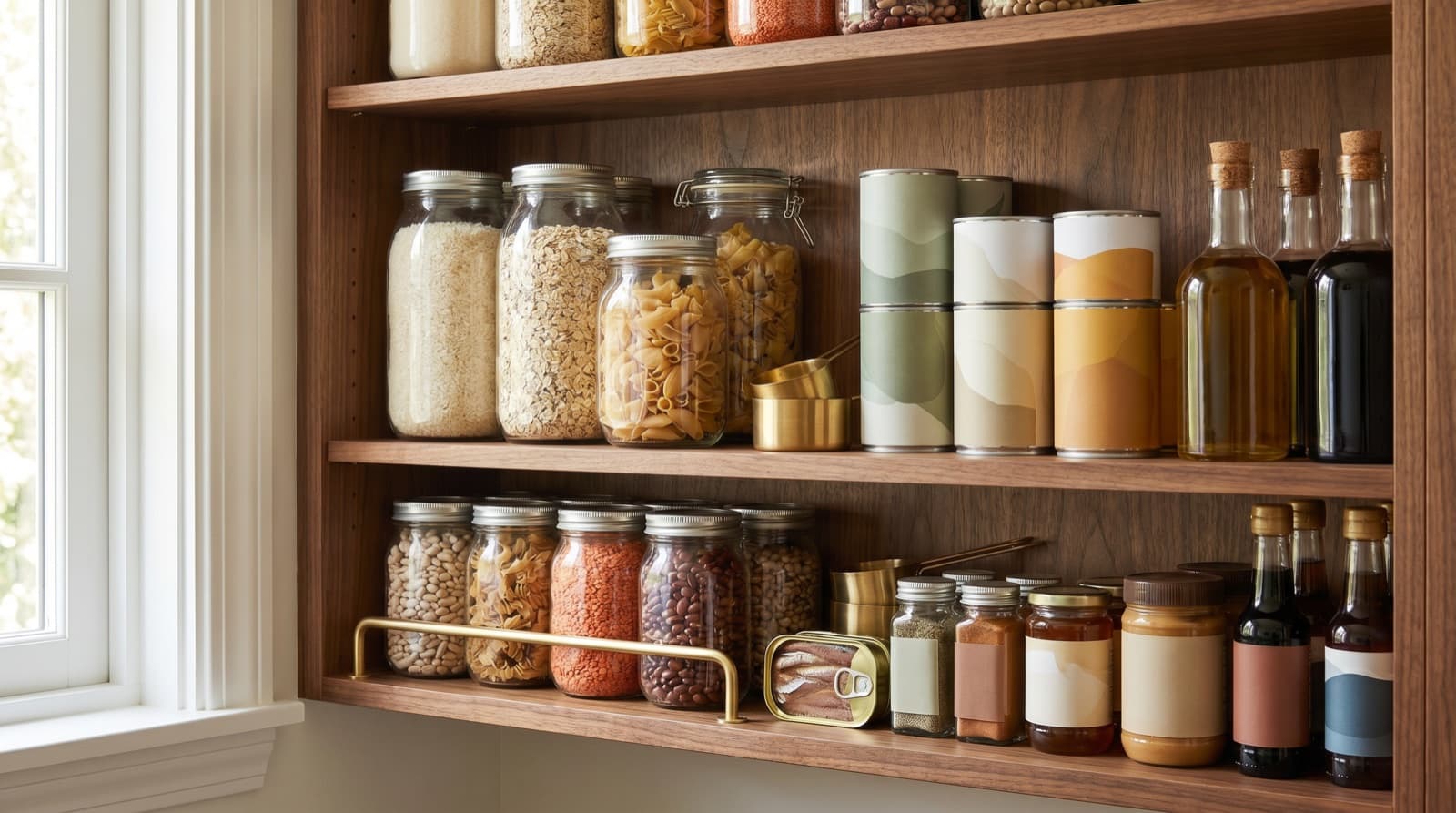
There’s a Pinterest version of a pantry where every jar is labelled in elegant calligraphy and the chickpeas are organised by shade. This is not that. This is the list of ingredients that, if you have them in the cupboard, mean you can cook dinner on a Tuesday night without a grocery run.
Twenty-five staples, grouped into six categories. Most are cheap. All of them earn their shelf space in the kind of weeknight cooking that actually happens. If you’re stocking a pantry from scratch, this is your starter list. If you’ve been cooking for years, this is the audit, are the unsung heroes still on the shelf, or has the truffle oil pushed them out?
Category 1: The cooking fats
- Extra-virgin olive oil, for finishing, dressings, and almost any savoury cooking under medium heat. Don’t buy the cheapest one. A decent single-origin bottle transforms simple food.
- A neutral cooking oil (sunflower, rapeseed, or grapeseed), for high-heat cooking, frying, and anything you don’t want to taste of olive oil.
- Butter (salted and unsalted), salted for eating, unsalted for baking. Yes, the freezer counts as the pantry here.
- Toasted sesame oil, a small bottle goes far. Drizzle, don’t cook with. Punches up Asian-leaning dishes instantly.
Category 2: The flavour foundations
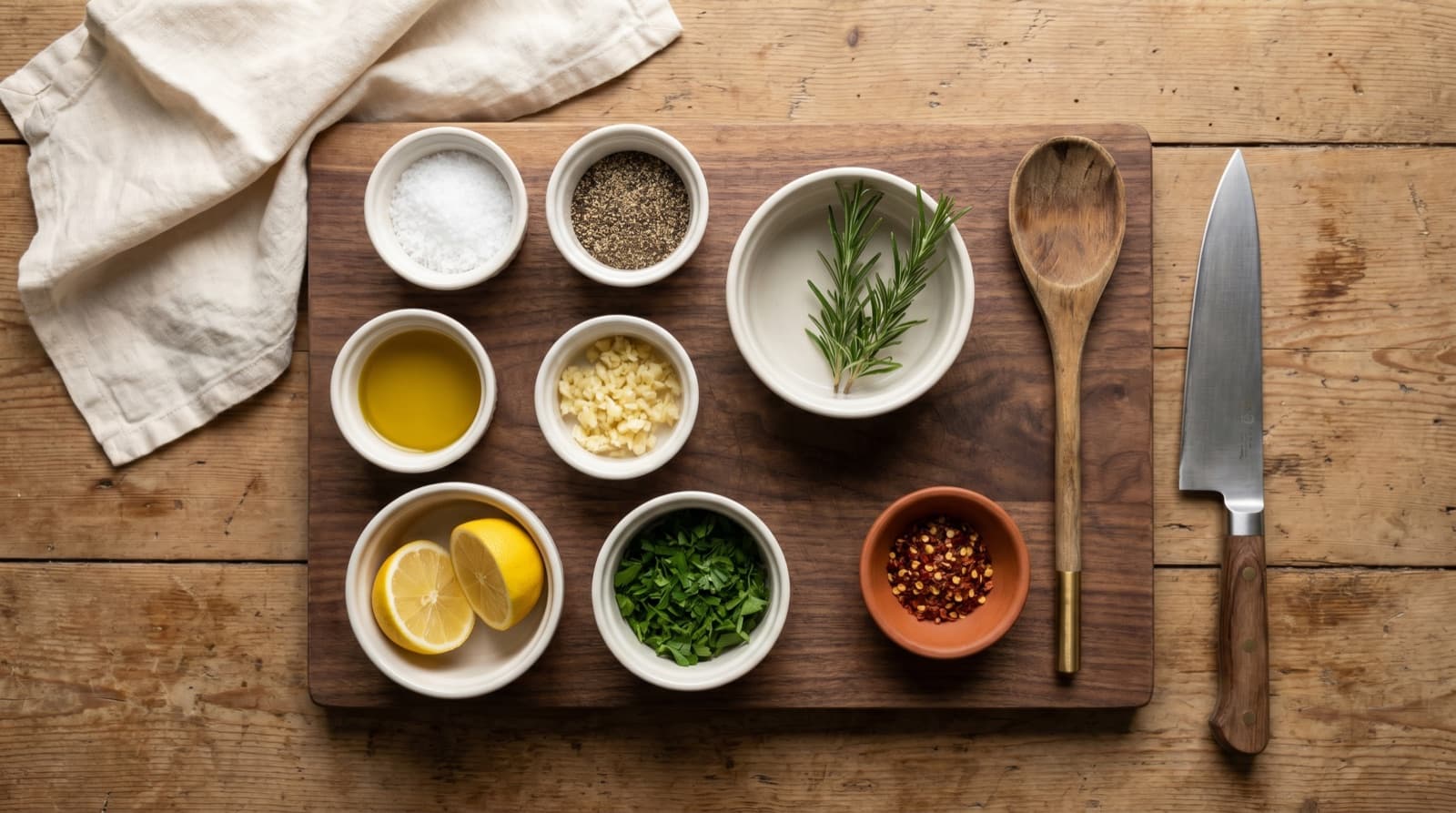
- Salt (flaky and fine), flaky for finishing, fine for seasoning during cooking. The single most important ingredient in the kitchen, and most home cooks under-use it.
- Whole black peppercorns in a mill, ground pepper from a pre-ground tub is a different ingredient. Whole peppercorns last years.
- Garlic, fresh bulbs, not jarred mince. Lasts weeks on the counter, transforms anything you cook it into.
- Yellow onions, the foundation of probably 60% of the world’s savoury dishes. Cheap, lasts forever.
- Lemons, acid is the single most undervalued flavour lever in home cooking. A squeeze of lemon at the end of cooking lifts almost any dish.
Category 3: The spice rack starter kit
You don’t need 47 spices. You need these eight, kept fresh (whole spices last 2–3 years; ground spices lose potency after a year).
- Cumin (whole seeds preferred), the backbone of Mexican, Indian, North African, and Middle Eastern cooking.
- Smoked paprika, instant warmth. Goes on roasted vegetables, eggs, beans, chicken.
- Dried chilli flakes, for heat with everything from pasta to roasted broccoli.
- Cinnamon (sticks and ground), sweet baking, but also savoury (Moroccan tagines, Mexican mole).
- Dried oregano, the only dried herb that genuinely outperforms its fresh form for most dishes.
- Bay leaves, for soups, stews, braises. Add one. Don’t eat it.
- Whole nutmeg + a small grater, for white sauces, eggs, custards. A jar of pre-grated nutmeg is wasted money.
- A curry powder or garam masala, a shortcut spice blend earns its place when you cook tired and want depth in one teaspoon.
Category 4: The carbs and grains
- Dried pasta (long and short shapes), spaghetti and a short shape (penne, rigatoni, fusilli) covers 95% of pasta dishes.
- Long-grain rice (basmati or jasmine), the default carb base. A rice cooker or a tight-lidded pot is enough.
- Rolled oats, breakfast, granola, oat pancakes, even savoury oat porridge.
Category 5: The tinned and jarred
The most underrated category in any pantry. Tinned goods are cheap, last for years, and turn into dinner with zero prep.
- Tinned whole peeled tomatoes, the foundation of pasta sauces, shakshuka, soups, stews. Buy the good Italian kind; the difference is real.
- Tinned beans (chickpeas, white beans, black beans), protein-rich, ready in 30 seconds, work in salads, stews, dips, sides.
- Tinned tuna or sardines (in olive oil), dinner in 5 minutes when the fridge is empty. Tossed with pasta, piled on toast, mixed with beans.
Category 6: The fermented & condiment shelf
- Soy sauce (light) and fish sauce, the umami one-two. Soy goes everywhere; fish sauce is the secret weapon of vinaigrettes, braises, and roast chicken.
- Vinegars (red wine and rice), for dressings, finishing, deglazing. Red wine for European cooking, rice for Asian.
The honourable mentions
These almost made the list of 25, and earn shelf space if you cook specific cuisines: tahini (Middle Eastern, dressings, hummus), miso (Japanese, depth in soups and dressings), Dijon mustard (vinaigrettes, glazes, sandwiches), maple syrup or honey (sweet and savoury), tomato paste (concentrated tomato flavour), capers (briny punch), parmesan or pecorino (a wedge in the fridge lasts weeks and finishes a hundred dishes).
How to actually keep track of it all
The reason most people end up with three half-used jars of cumin is simple: out of sight, out of mind. The fix isn’t a fancy label maker, it’s a list you can check from your phone before you shop. We built Pantree partly for this: log what’s on your shelf with quantities and expiry dates, and you stop overbuying. It’s also why we wrote a follow-up post on pantry organisation ideas that actually stick, and why our framework on what to cook with what you have relies on these 25 staples being where you can find them.
The starter shopping list
If you’re stocking a pantry from scratch, work through the 25 above in batches across two or three weekly shops, it costs less and lets you see what you actually use. Add the honourable mentions only after you’ve cooked a recipe that calls for them. The pantry that works isn’t the one that looks best on Pinterest. It’s the one that has dinner in it on a Tuesday night.
Frequently Asked Questions
What are the most essential pantry staples?
The non-negotiables for most home kitchens: olive oil, salt, black pepper, garlic, onions, dried pasta, rice, tinned tomatoes, tinned beans, eggs, soy sauce, lemons, and a hard cheese (parmesan or pecorino). With these alone you can build at least a dozen weeknight meals without a recipe.
How do I stock a pantry from scratch on a budget?
Buy the dry goods (rice, pasta, oats, beans, lentils) in larger sizes from the bulk section, the per-serving price is much lower. Choose one good olive oil and one neutral oil rather than five specialty oils. Skip the trendy ingredients you saw on TikTok until you've actually cooked from a recipe that uses them.
How long do pantry staples last?
Tinned goods (tomatoes, beans, fish): 2–5 years. Dried pasta and rice: 2 years. Whole spices: 2–3 years. Ground spices: 1 year (they lose potency, not safety). Olive oil: 18–24 months (store away from light and heat). Honey: indefinite. Most pantry staples have a long buffer, the 'best before' date is usually a quality indicator, not a safety deadline.
What pantry items aren't worth buying?
Single-purpose specialty ingredients you saw in one recipe (truffle oil, niche dried mushrooms, exotic dried herbs) almost always sit unused for years. Pre-made spice blends are usually overpriced versions of three spices you already have. Bottled minced garlic and ginger save 30 seconds but cost 5× the price and taste worse than fresh. The exception: if you genuinely cook a particular cuisine weekly, the specialty ingredient earns its place.
How do I know what I already have in my pantry?
If you've ever bought a third tin of chickpeas because you forgot you had two, you already know the problem. The simplest fix is a list, a sticky note on the inside of the cupboard door, or a digital list. Apps like Pantree turn the inventory into something searchable so you can answer 'do I have x?' from your phone instead of digging through the back of the shelf.
What's the difference between 'pantry' and 'staple' ingredients?
A pantry ingredient is anything stored at room temperature long-term (tinned, dried, bottled, oils, vinegars, spices). A staple is anything you reach for in the majority of meals, staples can be pantry items (olive oil, garlic), fridge items (eggs, butter, milk), or counter items (onions, potatoes). The 25 below is a 'starter pantry', the staples that earn permanent shelf space in most home kitchens.
Should I buy organic for pantry staples?
For dry goods like pasta, rice, oats, and beans the organic premium rarely translates to a noticeable difference in cooking. For oils, vinegars, soy sauce, and spices, quality matters more than the organic label, a well-made conventional product often beats a mediocre organic one. The exception worth paying for: extra-virgin olive oil from a single origin you can verify, since cheap olive oil is frequently adulterated.
Track your pantry without thinking about it.
Pantree logs what’s in your kitchen and tells you what to cook with it. Free on the App Store.
