How Long Does Heavy Cream Last? (Opened, Unopened & Frozen)
The problem with heavy cream is that most recipes call for a few tablespoons out of a 300ml carton. The rest goes back in the fridge, and a week later you’re not sure whether it’s still good. Here’s exactly how long it lasts, how to tell when it’s gone off, and what to do with the rest so it doesn’t become a write-off.
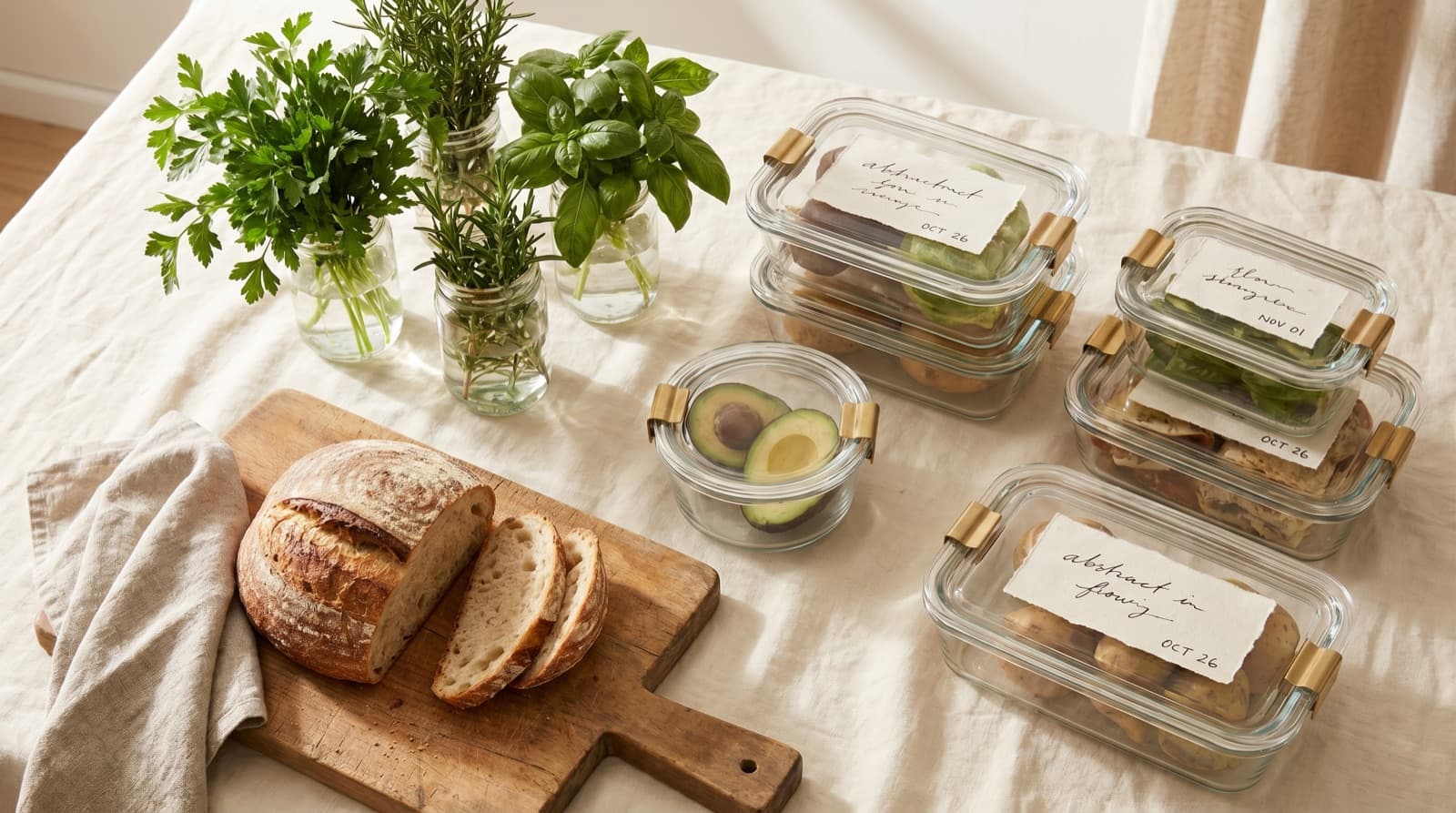
The Numbers at a Glance
| Condition | How long it lasts |
|---|---|
| Unopened — fridge (pasteurised) | Until best-by date |
| Unopened — cupboard (UHT/long-life) | Until best-by date (often months) |
| Opened — fridge | 5–7 days from opening |
| Frozen (portions in freezer bag) | 2–3 months best quality |
| Left at room temperature | 2 hours maximum; discard after |
These figures align with FoodSafety.gov’s cold food storage charts and USDA FSIS guidelines on dairy storage. They assume a fridge held at or below 4°C (40°F).
Pasteurised vs Ultra-Pasteurised: Why It Matters
Most heavy cream sold in the chilled aisle of supermarkets is standard pasteurised cream, heated to around 72°C for 15 seconds to kill pathogens while leaving flavour largely intact. This cream needs refrigeration from the moment it’s packed and has a relatively short shelf life — typically 2–3 weeks from production.
Ultra-pasteurised (UP) or ultra-high-temperature (UHT) cream is heated to 135°C or above for a few seconds, destroying a far broader range of microorganisms. Sold in Tetra Pak or similar shelf-stable cartons, it keeps for months at room temperature unopened. Once opened, however, it behaves like regular cream: refrigerate immediately and use within 5–7 days.
The trade-off is flavour. UHT processing can give cream a slightly cooked or flat taste, which is noticeable when cream is the primary flavour component — a simple whipped cream, a crème brûlée, or a panna cotta. For sauces, soups, and baked goods where it plays a supporting role, the difference is negligible. If flavour is paramount, pasteurised cream is better; if pantry convenience matters more, UHT wins.
Opened Heavy Cream: Getting the Full 7 Days
The 5–7 day window for opened cream is achievable with consistent handling. The two variables that shorten it most are temperature fluctuations and cross-contamination.
Temperature. Unlike fermented dairy products such as sour cream or yoghurt, heavy cream has no protective bacterial cultures. It relies entirely on cold and clean handling to stay fresh. Storing it in the fridge door — where temperature swings by several degrees every time the door opens — can cut the window to 4–5 days. A middle shelf at the back, where the temperature barely moves, is meaningfully better.
Cross-contamination. Pour cream directly from the carton rather than scooping with a spoon or ladle that has been in another dish. A single spoon carrying food particles or bacteria from a previous use can introduce enough contamination to accelerate spoilage significantly. Once cream starts to sour, the process is quick.
Container. If the original carton has a tear-open tab or doesn’t reseal well, transfer the cream to a clean jug or container with a tight-fitting lid. Minimising air exposure slows oxidation of the fat and reduces the chance of the cream absorbing odours from the fridge — cheese, onions, and cooked food all contribute their own bacteria to an open container.
The Single Best Use of Leftover Heavy Cream
If you bought a carton for a pasta sauce or a soup and have most of it left, the quickest fix is to make it into whipped cream while it’s still fresh. Whipped cream keeps 2–3 days in a sealed container in the fridge, or up to a week if piped onto a sheet of greaseproof paper and frozen flat. It takes five minutes, uses no additional ingredients, and turns imminent waste into a ready-to-deploy dessert topping.
The second-best fix is reduction. Heavy cream reduced to a thick sauce keeps well in the fridge for 3–5 days and functions as a base for gratins, pasta sauces, and creamy risottos all week. A litre of cream becomes a concentrated 250ml that takes up far less fridge space and is already halfway to a finished dish.
The third option — freezing — is the right call when neither of the above is practical and the cream still has a day or two left in it.
Freezing Heavy Cream: What to Expect
Heavy cream freezes, but it doesn’t freeze gracefully. The fat-and-water emulsion that makes cream smooth is disrupted by ice crystal formation: when the cream thaws, the fat and liquid separate, leaving a grainy, pourable-but-not-smooth texture that cannot be whipped. This makes frozen-then-thawed cream useless for anything where texture matters directly — whipped cream, crème anglaise, panna cotta, the cream on top of strawberries.
For cooked applications, however, the separation is irrelevant. Stirred into a sauce, blended into a soup, poured over a gratin, or baked into a quiche, the fat recombines under heat and the dish tastes exactly as it would with fresh cream. The same applies to cakes and muffins.
Freeze in small portions to avoid thawing more than you need at once. An ice cube tray gives you roughly 2-tablespoon cubes — the right quantity for adding a splash to a sauce or enriching a soup. Transfer frozen cubes to a labelled zip-lock bag and use within 2–3 months. Thaw overnight in the fridge, shake or stir well, and add to the dish. The same approach works with leftover butter and milk.
Heavy Cream Left Out at Room Temperature
The two-hour rule applies. Heavy cream left out for more than two hours at room temperature (one hour if the ambient temperature is above 32°C / 90°F) should be discarded, regardless of how it smells. Unlike fermented dairy, cream has no natural antimicrobial protection: bacteria including Staphylococcus aureus and Listeria multiply rapidly in the temperature danger zone (4–60°C / 40–140°F), and cream that has been left out for several hours during a dinner party can harbour a dangerous bacterial load while still smelling perfectly fine.
How to Tell If Heavy Cream Has Gone Off
Smell is the definitive test. Fresh heavy cream has a clean, neutral, milky scent — slightly rich, but not sour or sharp. Spoiled cream has a distinctly sour or rancid smell that is immediately off-putting, well beyond normal dairy.
Beyond smell, look for:
- Curdling or visible lumps. Fresh cream pours smoothly and evenly. If you see lumps, clumps, or separation that doesn’t resolve when you swirl the container, the cream has begun to coagulate — a sign of bacterial acid production. This is different from the slight thickening that happens when very cold cream warms slightly; lumping is visible and doesn’t smooth out.
- Yellow or grey discolouration. Fresh cream is white to pale ivory. A yellowish tinge suggests fat oxidation; grey indicates more advanced bacterial growth.
- Unusual texture at the carton opening. A dried crust or thickened rim around the pour spout isn’t conclusive on its own, but combined with an off smell, it suggests bacterial activity at the point of maximum air exposure.
If cream looks and smells fine, it is fine. If it fails either test, discard it — a 300ml carton of heavy cream costs less than £2, and the alternative is not worth it.
The Carton You Bought for One Recipe
The standard heavy cream waste scenario is entirely predictable: a recipe calls for 100ml. You buy a 300ml carton. You use the 100ml, put the remaining 200ml back in the fridge door with the cardboard flap barely folded, and move on. Seven days later it’s gone sour and you throw the whole carton away.
The EPA estimates that the average American household throws away the equivalent of around £1,500 of food per year, and dairy is one of the top contributors. A 200ml carton of cream wasted twice a month adds up faster than it feels in the moment.
The structural fix isn’t discipline — it’s visibility. When Pantree logs the heavy cream you bought on Saturday and flags it in your Tuesday meal suggestions, you actually make the pasta with cream sauce instead of ordering takeaway. The cream gets used; nothing gets thrown out.
Frequently Asked Questions
How long does opened heavy cream last in the fridge?
Opened heavy cream lasts 5–7 days in the fridge, according to FoodSafety.gov's cold food storage charts. That window assumes a fridge temperature at or below 4°C (40°F), a clean pour each time (no double-dipping spoons), and the carton or container properly resealed. Fridge-door storage shortens the window — doors swing between 4°C and 10°C with every opening, and cream at the warmer end of that range spoils noticeably faster. At the back of a cold shelf, 7 days is realistic. In the door, 4–5 days is more honest.
How long does unopened heavy cream last?
Unopened heavy cream lasts until its best-by or use-by date when refrigerated continuously. Ultra-pasteurised (UHT) heavy cream — the type sold in long-life cartons that don't need refrigerating until opened — can last several weeks past purchase in the cupboard, and 7–10 days in the fridge after opening. Standard pasteurised heavy cream from the chilled aisle has a shorter window and typically won't last beyond 1–2 weeks past its best-by date even unopened, assuming a consistent cold chain. Check which type you have: UHT cartons are sold at room temperature; pasteurised cream is always refrigerated at the shop.
Can you freeze heavy cream?
Yes, but with a significant trade-off. Freezing breaks the fat emulsion in heavy cream, so when it thaws, the texture becomes grainy and separated rather than smooth and pourable. It will not whip properly after thawing — the fat globules that need to be intact to trap air are disrupted by ice crystal formation. However, frozen-then-thawed heavy cream works well in cooked applications: added to pasta sauces, stirred into soups and chowders, used in quiches and gratins, or baked into cakes and scones. Freeze in small portions — ice cube trays are ideal, roughly 2 tablespoons per cube — then transfer to a labelled freezer bag. Use within 2–3 months for best quality. Thaw overnight in the fridge and stir or shake well before use.
How do you tell if heavy cream has gone off?
Smell is the most reliable indicator. Fresh heavy cream has a clean, neutral, milky scent with a slight richness. Spoiled heavy cream smells sour, rancid, or distinctly unpleasant — not just tangy, but off in a way that's hard to miss. Beyond smell: (1) Look for any curdling or visible lumps that don't disperse when you swirl the carton — fresh cream is uniformly smooth and pourable. (2) Check for any yellow or greyish discolouration; fresh heavy cream is white to pale ivory. (3) If a crust or thickened layer has formed around the opening, that's oxidation and bacterial activity at the surface. A cream that passes the smell and appearance test is almost certainly fine; one that fails either should be discarded.
Can you whip heavy cream that's close to its use-by date?
Yes, as long as it still smells and looks fresh. In fact, cream that is 2–3 days old often whips faster than very fresh cream, because some of the emulsifiers break down slightly over time, making it easier for air to be incorporated. What matters for whipping is that the cream is cold (ideally 4°C or below), the bowl and whisk are also cold, and the cream hasn't started to sour. If it passes the smell test, whip it and use it — turning approaching cream into whipped cream is a practical way to extend it by another day or two in the fridge, or up to a week if piped and frozen.
What's the difference between heavy cream, whipping cream, and double cream?
All three are high-fat creams, but the fat percentages differ. In the US, heavy cream (or heavy whipping cream) must contain at least 36% milkfat; whipping cream sits at 30–36%. In the UK, double cream is the equivalent of heavy cream at 48% fat, and single cream (18% fat) is not suitable for whipping. The higher the fat content, the more stable the whipped result and the longer the cream holds its shape. For shelf life purposes, all three behave identically: 5–7 days once opened, frozen for 2–3 months with the same texture trade-offs.
Stop buying cream you’ll only half-use.
Pantree tracks what’s in your fridge and pantry, reminds you before things expire, and turns what you have into recipes for tonight. Free on the App Store.
