How to Build a Weekly Meal Plan That You’ll Actually Stick To
Most meal plans fail by Wednesday. Here’s a 5-step framework for building a weekly plan around real life, what’s already in your kitchen, what your week actually looks like, and what you’ll genuinely want to eat after a long day.
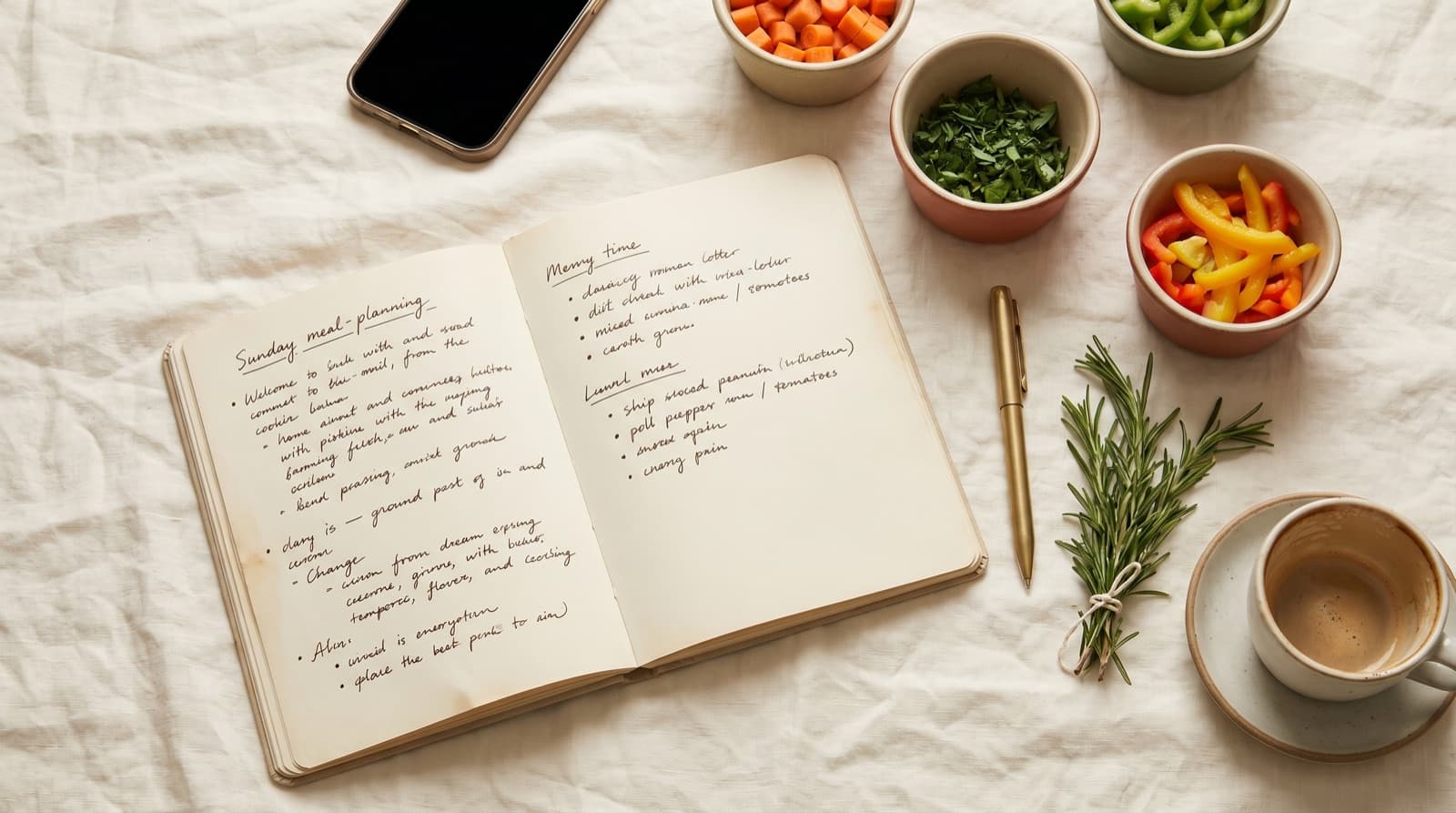
Most meal plans fail in the same predictable way. Sunday-you, full of optimism and caffeine, plans seven different dinners involving ingredients you don’t own. Wednesday-you, exhausted, looks at the unmade pad thai with the bag of rice noodles you forgot to buy, gives up, orders pizza, and spends the next three days eating wilted bok choy out of guilt.
The problem isn’t willpower. It’s that the plan was never realistic. A meal plan that survives a normal week has three things going for it: it uses what you already have, it has fewer meals than you think you need, and it leaves room for the inevitable curveball. Here’s how to build one in five steps.
Step 1: Audit before you plan
Before you write a single recipe down, look in the fridge, freezer, and pantry. Three things to note: what’s already there, what needs using this week (anything within 3–4 days of expiry), and any half-used ingredients (the open jar of harissa, the quarter of a cabbage). These become anchors for your plan.
This is the most-skipped step and the most important. The recipes you choose should be partly determined by what’s already on your shelf. Otherwise you’re shopping for an empty kitchen even when you have $80 of food in there.
Step 2: Look at your actual calendar
How many nights this week are you genuinely home with time to cook? For most working households the honest answer is 3–4, not 7. The other nights are: a work dinner, a kids’ activity, a date night, a Wednesday so exhausting you’ll be reheating something. Plan for the realistic number of cook-nights, not the aspirational one.
The 4-dinner rule: plan 4 dinners. Build in 1–2 “use it up” nights for leftovers or fridge-clearing improvisation. Treat 1 night as a known takeaway/eat-out without guilt. That’s the week.
Step 3: Pick meals that share ingredients
The single biggest waste lever in meal planning is buying a herb, a vegetable, or a sauce for one meal and leaving the rest to wilt. Choose meals that share ingredients so you finish things off.
Examples: If you’re using fresh coriander for tacos on Monday, plan a Thai-leaning curry for Wednesday so the rest gets used. If you’re buying a whole cauliflower for a roasted side, plan another night that uses the second half. If you’re buying a tin of coconut milk for a curry, the leftovers go into a chicken and rice dish or a smoothie.
Our framework on what to cook with what you have is the underlying logic here, most weeknight meals fit a simple template (protein + carb + vegetable + flavour driver) and the variations come from what’s actually in your kitchen.
Step 4: Match cooking effort to your energy
Schedule cook-effort the way you schedule meetings. Sunday you’re fresh, that’s the night for the more involved meal. Wednesday you’re cooked, that’s the night for sheet-pan, one-pot, or 15-minute pasta. If you put the ambitious meal on your most exhausted night, you will not cook it. That’s not a discipline failure; that’s a misallocation of energy.
A simple template:
- Sunday: roast or braise (something that fills the house with smell and produces leftovers)
- Monday: use Sunday’s leftovers (rebuilt into tacos, a salad, or a grain bowl)
- Tuesday: 30-minute pasta or stir-fry
- Wednesday: sheet-pan or one-pot dinner (low effort)
- Thursday: “use it up” night with whatever’s left
- Friday: takeaway / eat out / pizza
- Saturday: something fun or social
Step 5: Build the shopping list from the gap
With your meals chosen, build a shopping list of onlywhat you don’t already have. The audit from step 1 means you’re not buying the third tin of chickpeas. The shared ingredients from step 3 mean you’re buying full bunches of herbs, not single sprigs.
One trick that saves real time: if you save recipes from social (TikTok, Instagram, food blogs), you can use Pantree to auto-generate the shopping list from a multi-recipe plan. It pulls all the ingredients, deduplicates them, and subtracts what’s already in your pantry. The 10-minute list job becomes 30 seconds.
The case for prepping (some of it) on Sunday
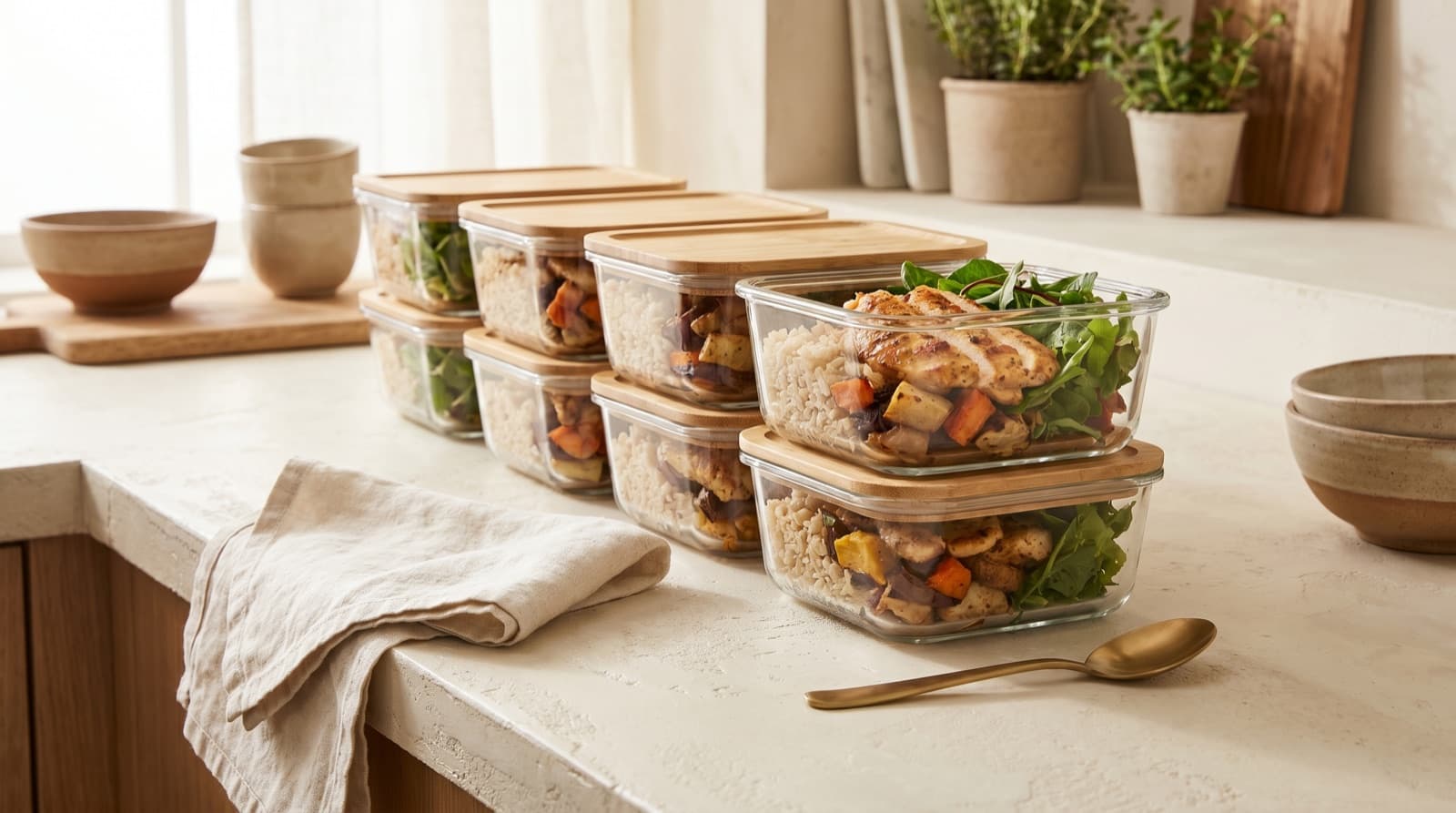
Once you have a plan, you can decide whether to prep on Sunday or cook each night. Prep doesn’t mean cooking five full meals; it can be:
- One batch of grains (rice, quinoa, farro) that feeds three meals
- One sheet-pan of roasted vegetables that becomes the side for two dinners and a grain bowl lunch
- One protein cooked in bulk, grilled chicken, hard-boiled eggs, or a pot of beans
- One sauce or dressing that makes the week taste different (herby yoghurt, a tahini-lemon, a chimichurri)
Even one of those, prepped on Sunday, takes 20 minutes of effort off your weeknight cooking. For more on the difference between prepping for the week and just cooking each night, our guide on how to meal prep for the week walks through both approaches.
What this looks like in practice
Sunday audit: half a roast chicken left over, half a cauliflower, a bag of spinach about to wilt, half a tin of coconut milk, lentils in the pantry, half a lemon.
4-dinner plan from that:
- Monday: chicken and spinach quesadillas (uses the chicken + spinach + cheese in the fridge)
- Tuesday: roasted cauliflower & lentil bowl with herby yoghurt (uses the cauliflower + lentils + lemon)
- Wednesday: Thai red curry with chickpeas (uses the rest of the coconut milk + chickpeas from the pantry)
- Thursday: “use it up”, whatever’s left becomes fried rice or a frittata
Shopping list from this: one yoghurt, fresh coriander, a tin of chickpeas, garlic if you’re running low. Maybe $10. Compare that with shopping for four unrelated recipes from a meal-plan template.
The realistic outcome
A meal plan you’ll stick to isn’t the most ambitious one, it’s the one that survives a Wednesday curveball. Audit, plan four, share ingredients, match effort to energy, shop the gap. Most households who do this consistently spend less, waste less, and stop ordering Thai out of mid-week guilt.
For the broader question of how to make this whole approach a habit, our post on how to save money on groceries covers the financial side, and how to stop wasting food covers the waste side. Same set of habits, different lens.
Frequently Asked Questions
How do I plan meals for a week?
Start with what you already have. Audit your fridge, freezer, and pantry first, anything close to expiry should anchor a meal this week. Then look at your calendar: how many nights are you actually home and have time to cook? Plan one fewer dinner than you think (life will eat one of them). Pick recipes that share ingredients to reduce waste. Build the shopping list from the gap between what you have and what you need.
How many meals should I plan for the week?
For most households: 4 dinners, 2 lunches that scale from dinner leftovers, and breakfasts on rotation rather than planned individually. Don't plan all 7 dinners, you'll inevitably have a takeaway, a late meeting, or a night out, and a too-rigid plan creates guilt and waste. The 4-dinner plan with 1–2 'use it up' nights flexes around real life.
What's the difference between meal planning and meal prepping?
Meal planning is the decision: what are we eating this week? Meal prepping is the execution: cooking some or all of those meals in advance. You can do meal planning without meal prepping (just plan and cook each night), but meal prepping without planning is how you end up with a fridge full of cooked rice you don't know what to do with.
How do I plan meals when my schedule is unpredictable?
Plan ingredients, not specific dishes. Buy a versatile protein (chicken, eggs, beans), 2–3 vegetables, and a couple of carb bases (rice, pasta) and stay flexible on what you make from them each night. Anchor one or two specific meals when you know you'll have time, and let the rest be improvised from the framework.
What apps are good for meal planning?
Calendar-based meal planners (Plan to Eat, Mealime) are good for rigid weekly plans. Recipe-organisation apps with pantry awareness (like Pantree) are better if you want suggestions based on what you already have, since they pull recipes from your saved library and match them to your inventory rather than forcing you to start from a recipe database.
Why do meal plans usually fail?
Three reasons: they're too ambitious (7 different dinners is unrealistic), they don't account for what's already in the kitchen (forcing you to shop for everything), and they don't have built-in flexibility (a single missed cook night ruins the entire plan). The fix is a smaller, more flexible plan that uses what you have and survives a Wednesday takeaway without falling apart.
How long does it take to plan a week of meals?
About 15–20 minutes once you have a system. The first time it'll take 30–45 minutes. Most of that time is the audit (5 minutes) and the recipe selection (10 minutes); writing the shopping list from a finished plan takes 2–3 minutes. Sundays after coffee is the standard slot for most households.
Plan from what you already have.
Pantree pulls saved recipes, matches them to your pantry, and builds the shopping list. Free on the App Store.
