How to Read a Recipe Like a Pro (And Cook It Better)
Most weeknight cooking failures aren’t skill problems, they’re reading problems. Here’s how to read a recipe properly: ingredient lists, terminology, measurements, and the steps you should always do first.
You’ve probably had this experience: you’re halfway through a recipe, the pan is smoking, and step 6 says “add the chicken stock you reduced earlier”, except you skipped that step because it was tucked into the headnote and you only read the numbered instructions. The chicken stock that’s reducing now is for next time. Dinner is now in three pieces.
This isn’t a skill issue. It’s a reading issue. Recipes are weird hybrid documents, part shopping list, part timer, part instructions, with critical information sometimes buried in the bit you’d normally skim. Here’s how to read one properly.
1. Read the whole thing before you start
Always. No exceptions. It takes 90 seconds and surfaces:
- Hidden time, “rest the dough for 1 hour”, “marinate overnight”, “bring chicken to room temperature for 30 minutes”
- Equipment you don’t have, “food processor”, “immersion blender”, “Dutch oven”, “sieve”
- Steps that need to overlap, “while the rice cooks, prepare the sauce”
- Critical asides in the headnote (“use a very ripe avocado”, “don’t skip the resting step”)
The recipe’s headnote, the chunky paragraph above the ingredient list, is not just garnish. Most professional recipe writers tuck their most important warnings there. Read it.
2. Treat the ingredient list as your shopping & mise en place list
Two tasks live here: do you have everything, and what needs prepping before you start cooking?
Format codes: the comma in an ingredient line tells you when the prep happens.
- “1 onion, diced” means dice the onion before the recipe starts. Not while the oil is smoking.
- “1 cup flour, sifted” means sift first, then measure.
- “1 cup sifted flour” means measure first, then sift. (Yes, the order matters by 10–15%.)
- “Butter, softened” means take it out of the fridge an hour before. Cold butter does not cream; melted butter is a different ingredient entirely.
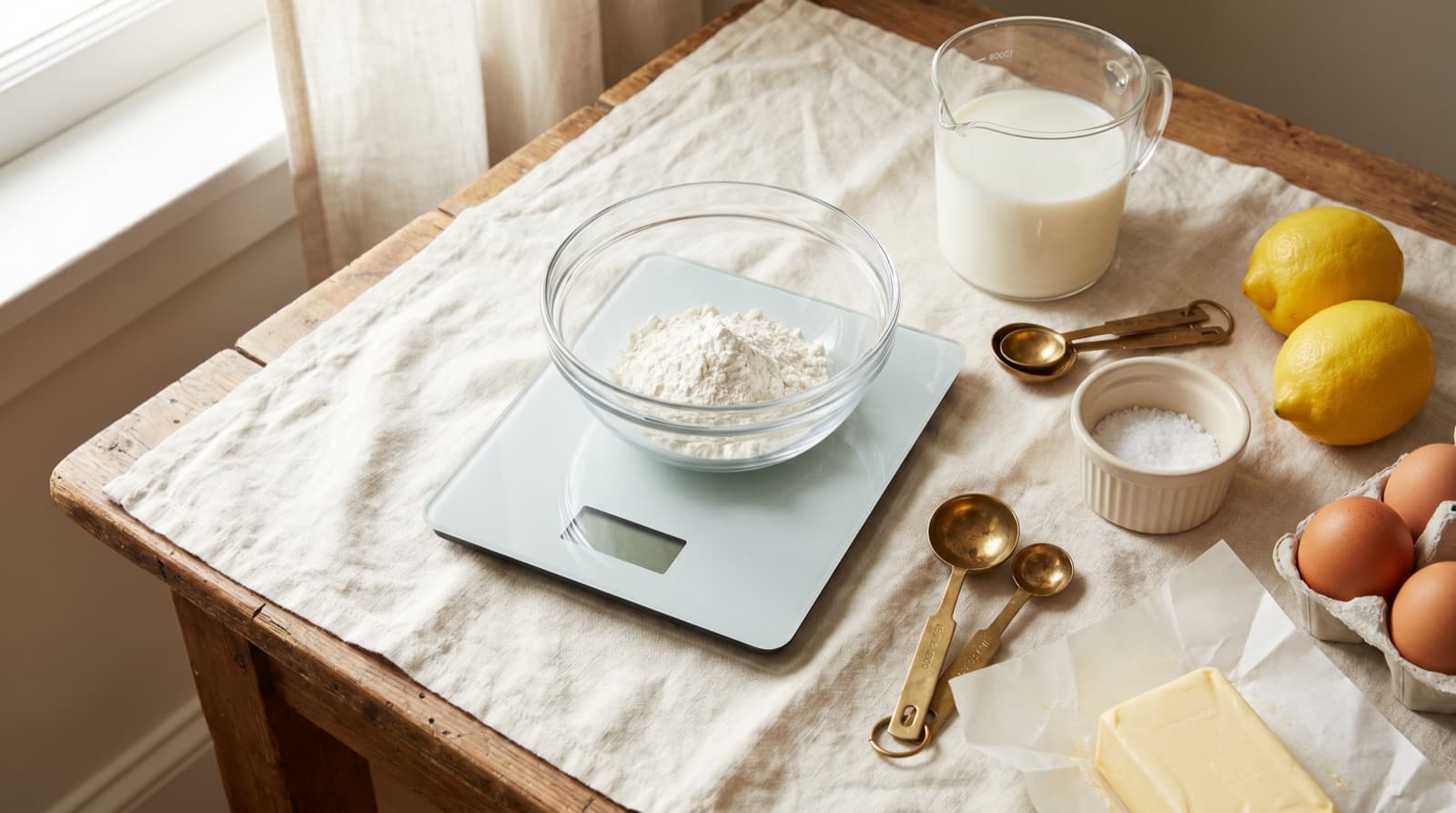
Mise en place (literally, “everything in its place”) is professional shorthand for measuring and prepping every ingredient before you turn the stove on. For any recipe with a fast active phase (stir-fries, pan sauces, sautées with garlic that burns in 30 seconds), do this. Six small bowls of premeasured stuff is faster than one chaotic counter.
3. Decode the cooking terminology
Most cooking words are precise instructions disguised as casual verbs. The most useful ones to know cold:
- Sweat: cook gently in fat over low heat without browning. For onions and shallots when you want them soft and translucent, not caramelised.
- Sauté: cook quickly in fat over higher heat, tossing or stirring frequently. From the French for “jump”.
- Sear: very high heat, brief contact, hard browning. Forms the crust on steak and the fond at the bottom of the pan for sauces.
- Reduce: boil a liquid until volume decreases and flavour concentrates. “Reduce by half” means 50% less liquid, not faster heat.
- Deglaze: add liquid (wine, stock, water) to a hot pan to lift up the browned residue (the fond). Free flavour for sauces.
- Fold: gently combine without deflating. For whipped cream, beaten egg whites, anything aerated.
- Temper: gradually raise the temperature of a cool ingredient to prevent shock. Used for adding eggs to hot liquid, or melting chocolate without seizing.
- Bloom: heat spices in fat for 30 seconds before adding the next ingredient. Releases their flavour.
- Rest: let cooked meat sit for 5–10 minutes before cutting. Lets juices redistribute. Skipping this step means a wet board and a dry steak.
- Al dente: “to the tooth”, cooked through but with a firm bite at the centre. For pasta, the test is biting through and seeing a tiny opaque core.
4. Know your measurements
Volume conversions:
- 1 tablespoon (tbsp) = 3 teaspoons (tsp) = ~15 ml
- 1 cup = 16 tbsp = ~240 ml (US) or 250 ml (metric)
- 1 fluid ounce = 2 tbsp = ~30 ml
- 1 stick of butter (US) = ½ cup = 8 tbsp = 113 g
Weight beats volume. A cup of flour can weigh anywhere from 120 to 160 grams depending on how packed it is. For baking, where ratios matter, weight is non-negotiable. Buy a digital kitchen scale; it’s the single most useful £15 you’ll spend on cooking.
Oven temperatures:
- 180°C / 350°F = standard baking
- 200°C / 400°F = roasting
- 220°C / 425°F = high-heat roasting, pizza
- Quick conversion: divide °F by 2 and subtract ~30 to get °C
5. Notice what the recipe assumes
Recipes assume you know things. “Brown the meat” assumes you know not to overcrowd the pan (which steams instead of browning). “Cook the onion until soft” assumes you know that’s 8–10 minutes, not 30 seconds. “Season to taste” assumes you taste as you go.
The fix isn’t to read recipes that explain everything (those are usually badly written). It’s to notice when the recipe is moving fast and slow down. If the recipe says “cook the onions until golden” in one line, that’s probably 8 minutes of work compressed into 5 words.
6. Substitute thoughtfully
When you don’t have an ingredient, ask what role does it play?
- Acid: lemon, vinegar, lime, tomato, yoghurt, wine, generally interchangeable in small quantities
- Fat: butter, olive oil, neutral oil, lard, context-dependent (butter for browning, oil for high heat)
- Aromatic alliums: onion, shallot, leek, spring onion, sub at roughly 1:1 with adjustment for sharpness
- Fresh herbs: use one third the amount in dried form (the flavour is concentrated)
- Hard cheese: parmesan, pecorino, grana padano , interchangeable in most recipes
For deeper substitution logic, our post on what to cook with what you have includes a substitution cheat sheet for the most common gaps.
7. Save the recipe in a way you can actually find again
Recipes scattered across TikTok DMs, Instagram saves, browser bookmarks, screenshots, and a notes app are recipes you’ll never cook from again. The single biggest upgrade most home cooks can make to their reading-and-cooking pipeline is putting every recipe in one place, in a clean structured format you can search.
That’s why we built Pantree: paste a TikTok or Instagram link, snap a photo of a handwritten card, or import from a food blog, and Pantree pulls out the structured ingredient list and steps. So when you reread the recipe at the stove, you’re reading a clean recipe, not scrubbing through a video.
The realistic outcome
Most cooking confidence comes not from new techniques but from reading recipes more carefully. Read all the way through. Mise en place anything fast. Know what fold and reduce mean. Substitute by role, not by name. Save your recipes somewhere structured. Most home cooks who do this consistently stop having Wednesday-night disasters and start trusting the recipe as a tool, not a minefield.
Frequently Asked Questions
Why should I read a recipe all the way through before cooking?
Because recipes lie about timing. The 'quick weeknight' recipe asks you to soak something for an hour. The '20-minute' recipe assumes your onion is already chopped. Reading the whole thing first surfaces the hidden time, the equipment you don't have, and the steps that need to overlap. It takes 90 seconds and saves the most common cooking failure: realising halfway through that the chicken needed to come to room temperature 30 minutes ago.
What does 'mise en place' mean and why does it matter?
Mise en place is French for 'everything in its place', measuring out and prepping all your ingredients before you start cooking. For weeknight cooks it sounds excessive, but for any recipe with a fast active phase (stir-fries, pan sauces, anything with butter that browns) it's the difference between a meal that comes together and a meal that burns while you frantically chop garlic. Rule of thumb: if any step says 'add quickly' or 'don't let it burn', do mise en place first.
What's the difference between a teaspoon, tablespoon and cup?
1 tablespoon = 3 teaspoons = ~15 ml. 1 cup = 16 tablespoons = ~240 ml (US) or ~250 ml (metric). 1 stick of butter (US) = ½ cup = 113 g. For dry ingredients, weight is more accurate than volume, 1 cup of flour can vary 30% depending on how packed it is. If a recipe gives you grams, use grams. If it only gives cups, level off the top with a knife.
What are the most confusing cooking terms?
The classics: 'fold' (gentle mixing to keep air in), 'sweat' (cook gently in fat without browning), 'reduce' (boil to evaporate liquid and concentrate flavour), 'temper' (slowly raise the temperature of eggs or chocolate to avoid scrambling/seizing), 'al dente' (cooked but firm at the centre), 'rest' (let meat or dough sit so juices/gluten settle), 'bloom' (heat spices in fat to release flavour), and 'deglaze' (add liquid to a hot pan to lift the browned bits). Most are about doing something gently or specifically, not just heat-and-stir.
How do I substitute ingredients I don't have?
Ask what role the ingredient plays. Acid (lemon, vinegar) substitutes for acid. Fat (butter, oil) for fat. Aromatics (onion, garlic, shallot) for aromatics. Herbs (fresh) for herbs (dried, at one third the amount). Specific cheese substitutions usually work within the same family (parmesan/pecorino/grana padano are interchangeable for grating; mozzarella/provolone for melting). For more on this, our framework on what to cook with what you have covers smart swaps.
What if a recipe is in a different system (metric vs imperial)?
Most modern recipe apps and cookbook publishers convert automatically. For manual conversion: 1 cup ≈ 240 ml; 1 tbsp ≈ 15 ml; 1 tsp ≈ 5 ml; ¼ pound ≈ 115 g; 1 ounce ≈ 28 g; oven temps: divide °F by 2 and subtract 30 for a rough °C (200°C ≈ 400°F). For baking, where exact ratios matter, use a kitchen scale and the gram measurements; for stovetop cooking the imprecision rarely affects the result.
How do I save and reread recipes from videos and social posts?
TikTok captions and Instagram Reels often have the recipe in the description, but they're a pain to scroll through and easy to lose. The cleanest approach: convert them into a structured recipe, a clean ingredient list with quantities and ordered steps, once, so you can reread the actual recipe rather than rewatching the video. Recipe-saving apps like Pantree do this automatically when you share a video link.
Your recipes, in one searchable place.
Pantree pulls structured recipes from TikTok, Instagram, blogs, and photos. Free on the App Store.
