How Long Do Fresh Herbs Last? (And the One Trick That Doubles It)
You buy a bunch of coriander for one recipe, use a third of it, and three days later it’s a slimy green puddle in the salad drawer. The herbs aren’t the problem. The bag is.
Fresh herbs are one of the highest waste-rate items in a normal household kitchen. The EPA estimates the average US family bins around $1,500 of food a year, and produce is the biggest single category. Within produce, soft herbs are the worst offender per dollar — you pay $3 for a bunch, use a tablespoon, and the rest goes black before you remember it’s there.
The fix isn’t willpower or a better meal plan. It’s the storage method. Treat herbs the way the supermarket treats them — cold, sealed in plastic, no air, no water — and you get three days. Treat them like cut flowers and you get two weeks. Here’s the breakdown.
The Two Categories That Matter
Every herb in your kitchen falls into one of two camps, and they need opposite treatment.
Soft herbs have tender leaves and soft, juicy stems. Basil, parsley, coriander (cilantro), mint, dill, chives, tarragon, chervil. They’re mostly water, they bruise easily, and they wilt within hours of being cut. They want to be treated like fresh flowers.
Woody herbs have tough leaves and bark-like stems. Rosemary, thyme, sage, oregano, marjoram, bay. They’re lower in water, hardier, and tolerate the cold and dry of a fridge. They want to be wrapped, not stood up.
If you remember nothing else: soft herbs go in water, woody herbs go in a towel. Everything below is a footnote to that sentence.
How Long Each Herb Actually Lasts
Numbers assume a 4°C / 39°F fridge, a herb that was fresh when you bought it, and the storage method noted.
Soft herbs (stems in water, loose plastic bag over the top)
- Parsley — 10–14 days. The longest survivor of the soft camp.
- Coriander / cilantro — 7–10 days. The roots are edible, save them for Thai curry pastes.
- Mint — 7–10 days. Bruises if packed tight, give it room.
- Dill — 5–7 days. The most fragile soft herb.
- Chives — 7–10 days, wrapped in a damp paper towel rather than stood in water (the hollow stems get waterlogged).
- Tarragon, chervil — 4–7 days.
- Basil — do not refrigerate. 7–10 days on the counter, stems in water, away from sunlight. In the fridge it blackens within 48 hours.
Woody herbs (wrapped in a damp paper towel, sealed)
- Rosemary — 2–3 weeks. Often the last thing standing in the fridge.
- Thyme — 2–3 weeks.
- Sage — 1–2 weeks.
- Oregano, marjoram — 1–2 weeks.
- Bay leaves — 1–2 weeks fresh, effectively forever once dried.
The One Trick That Doubles It: Stems in Water
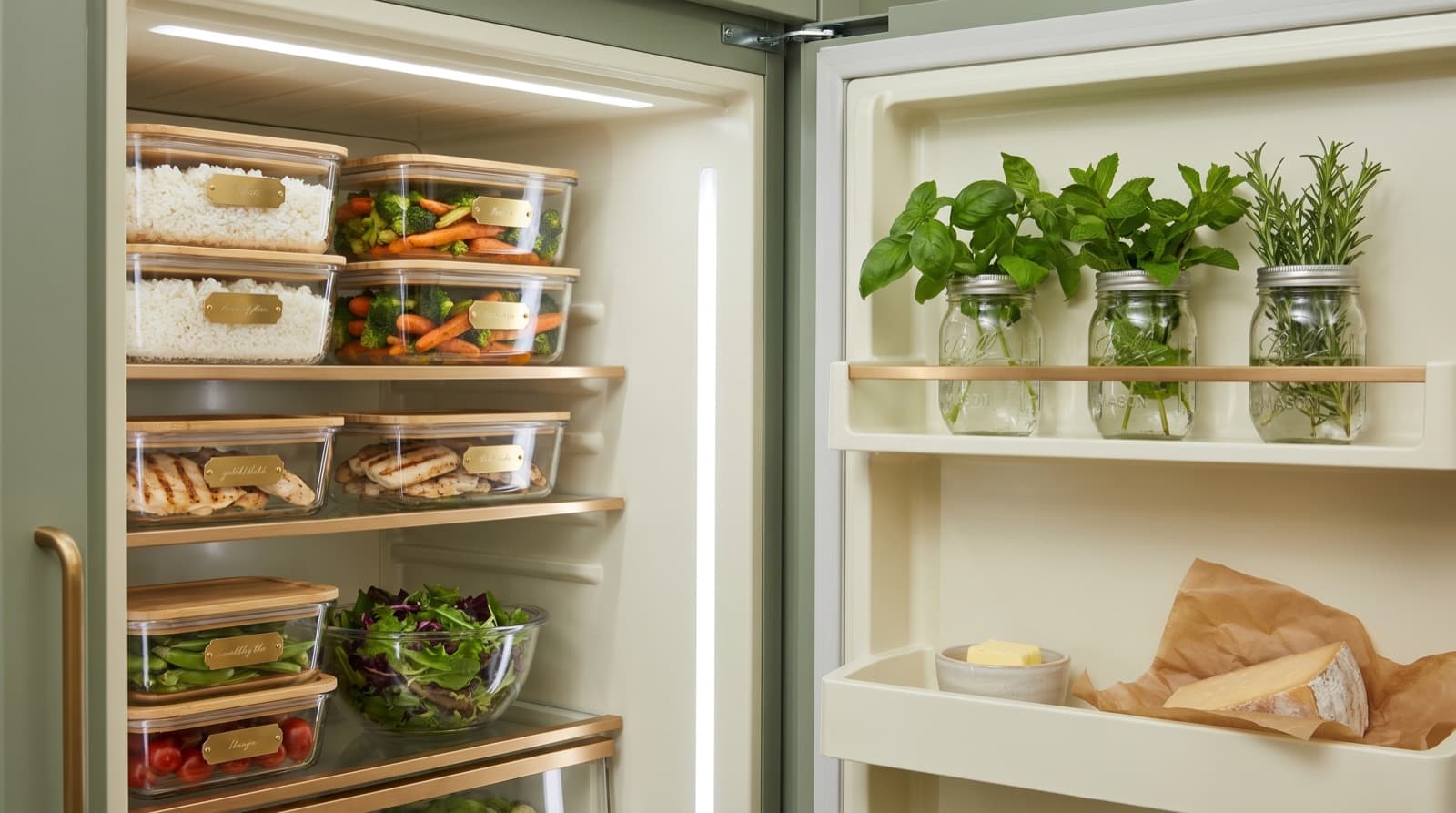
Pick up a bunch of parsley. Snip half a centimetre off the bottom of the stems on a chopping board. Stand the bunch in a glass or jar with about an inch of cold water in the bottom — just enough to cover the stem ends. Drape a loose plastic bag (the one the bunch came in is fine) over the top, lightly, no seal. Put the whole thing on a shelf in the fridge. Change the water when it clouds, every 3–4 days.
That’s the entire trick. It works because the stems can keep drinking, the leaves stay humid without sitting in their own condensation, and air can still circulate. It turns a three-day herb into a two-week herb. Basil is the only exception — same method, but on the counter, not in the cold.
Freezing: The Backstop for the Half-Bunch You Won’t Use
Even with the water trick, you’ll still buy more parsley than one recipe needs. The fix is to freeze the rest the day you buy it, not the day it starts to wilt. Freezing fresh herbs preserves flavour, not texture — thawed leaves go floppy — so the frozen stash is for cooking, not garnishing.
Soft herbs — oil cubes: Chop, pack into an ice-cube tray, top up with olive oil. Freeze, pop out, store the cubes in a labelled bag. Lasts 3–6 months. Drops straight into a hot pan, no thawing.
Soft herbs — water cubes: Same trick with water if you don’t want oil. Better for things going into soups and stews where you don’t need extra fat.
Woody herbs — whole on the stem: Strip the leaves later. A zip-top bag of frozen rosemary or thyme keeps 6–12 months and is genuinely indistinguishable from fresh once it hits a hot roasting tray.
How to Tell If Herbs Have Gone Off
The four signals, in order of seriousness:
- Slime on the stems. Bin it. The bacterial film that makes herbs slippery is the same one responsible for the sour smell. No amount of rinsing fixes it.
- Black or translucent leaves. Cold damage on basil, rot everywhere else. Once leaves have gone glassy, the cell walls have broken and the flavour is gone with them.
- Sour or fermented smell. Healthy herbs smell of the herb, faintly grassy underneath. A vinegary or rotting smell means bacterial breakdown is well underway.
- Visible mould. White or grey fuzz, usually at the stem ends. Discard the whole bunch — mould networks through the bunch faster than the visible patch suggests.
What is not a problem: wilting, yellow leaves on the outside, a faint “fridge” smell. Wilted parsley revives in ice water for 10 minutes. Yellow leaves you pick off and move on. The fridge smell rinses out under the tap.
The Habit That Actually Saves the Money
The shelf-life table is useless if you can’t remember what you bought. The single highest-leverage kitchen habit isn’t a new storage technique — it’s knowing what’s in the fridge before you stand in it at 7pm wondering what to make.
That’s what we built Pantree to do. It tracks what you’ve got, how long it’s been there, and what to cook before it turns. If half a bunch of coriander is staring down day six, Pantree surfaces three recipes it actually fits into — instead of you remembering on day ten, when it’s already in the bin.
More on the full picture in our guides on how to stop wasting food and the broader shelf-life reference for 30+ foods. When you’re trying to figure out a meal around a herb that’s about to turn, the what-to-cook-with-what-you-have framework is the one to grab.
The Point
Most herbs don’t die because they’re fragile. They die because the supermarket bag they came in is a small humid coffin. Re-cut the stems, stand them in water, give them air. Freeze the rest the day you buy it, not the day you remember.
Do that and you’ll stop binning $3 bunches every week, and the herb you wanted on Thursday will still be alive on Thursday.
Frequently Asked Questions
How long do fresh herbs last in the fridge?
Soft herbs like basil, parsley, coriander, mint, dill and chives last 2–3 days in the plastic bag they came in, but 10–14 days if you trim the stems and stand them in a jar of water like cut flowers, loosely covered with a bag. Woody herbs — rosemary, thyme, sage, oregano — last 2–3 weeks wrapped in a slightly damp paper towel inside an airtight container or zip-top bag.
Why does basil go black in the fridge?
Basil hates the cold. Below about 4°C / 39°F its leaves develop dark spots and turn translucent — it's cold damage, not rot. Store basil on the counter, stems in a glass of water, away from direct sun. It will last 7–10 days and you don't pay the supermarket-pack tax of binning a half-used bunch.
Can you freeze fresh herbs?
Yes, and you should — but the method matters. For soft herbs, chop them and freeze in an ice-cube tray topped up with olive oil or water (3–6 months). The frozen cubes drop straight into a hot pan. Woody herbs freeze whole on the stem in a zip-top bag and keep their flavour for 6–12 months. Freezing kills the texture, so don't expect to garnish with thawed herbs — but for cooking, the flavour is intact.
How can you tell if fresh herbs have gone off?
Slimy stems, blackened or translucent leaves, a sour or fermented smell, or visible mould all mean discard. Yellowing leaves alone are usually fine to pick off — the rest of the bunch is still good. A faint earthy or 'fridge' smell is normal and disappears once you rinse them.
Do supermarket herb packs last longer than market bunches?
No — usually the opposite. Plastic clamshells trap moisture and condensation, which accelerates rot. Bunches from a market or grocer last longer if you re-cut the stems at home and stand them in water. The supermarket pack's only real advantage is portion size for small households; the loose bunch wins on shelf life and price per gram.
Is it safe to eat herbs that are wilted but not slimy?
Yes. Wilting is just water loss, not spoilage. Wilted parsley, coriander or basil revives in a bowl of ice water for 10–15 minutes and is perfectly safe to eat. Toss them only when you see slime on the stems, blackened leaves, mould, or a sour smell.
Stop binning half a bunch of coriander every week.
Pantree tracks what’s in your fridge and what to cook before it turns. Free on the App Store.
