Best Before vs Use By vs Sell By: What the Dates Actually Mean
Most of us treat every date on a package as an expiry deadline — and bin good food the moment it passes. But only one of those dates is about whether the food is safe. The rest are about whether it’s at its best. Get the difference straight and you’ll waste less, save money, and stop being scared of a perfectly good tin of beans.
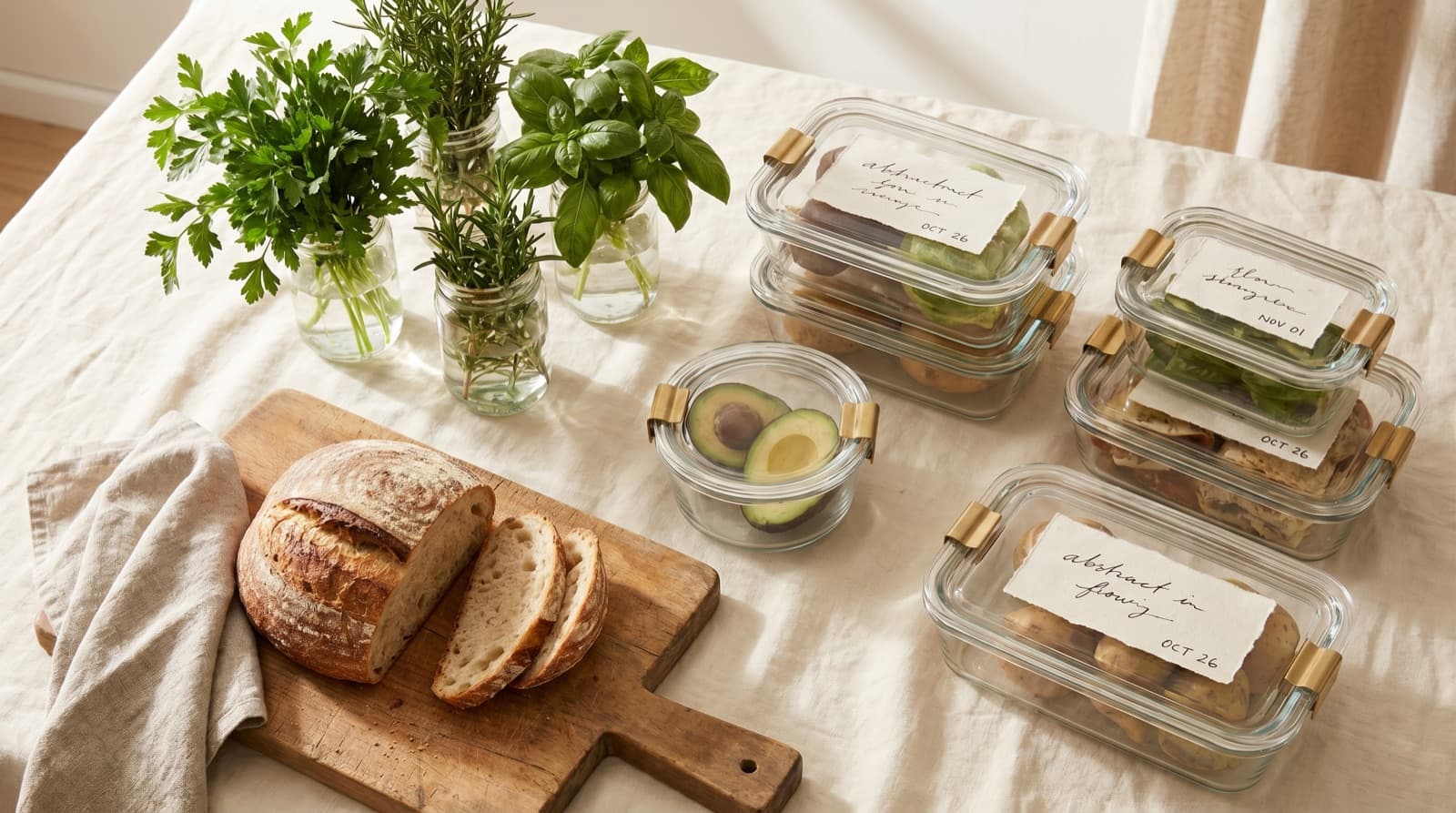
Food date labels are one of the great quiet causes of waste. In the UK, WRAP has estimated that confusion over date labels is behind a large share of the roughly 4.7 million tonnes of edible food households throw away each year — a meaningful chunk of it binned simply because a best-before date ticked over. In the US, the USDA makes the point bluntly: with the single exception of infant formula, product dates aren’t federally required and aren’t safety dates — they’re the manufacturer’s estimate of peak quality. Most of the food we bin on a date is food that was fine.
The fix isn’t to ignore dates. It’s to know which date you’re looking at, because they don’t all mean the same thing.
Use By — the safety date (obey it)
A use-by date is the important one. It appears on perishable, higher-risk foods — fresh meat and poultry, fish, cooked sliced meats, pâté, prepared salads, sandwiches, soft cheeses made from unpasteurised milk, ready meals — and it marks the last day the food is considered safe to eat. The UK’s Food Standards Agency is unambiguous: don’t eat food after its use-by date, even if it looks and smells fine.
That last part is the bit people find counter-intuitive. The bacteria that cause food poisoning — Listeria, Salmonella and the rest — don’t announce themselves with a smell or a slimy surface. A chicken breast a day past its use-by can look identical to one a day before. The use-by date exists precisely because your senses can’t be trusted to catch the danger. So with these foods, the date is the line, full stop.
The one lever you do have is the freezer. You can freeze almost anything right up to its use-by date; freezing pauses the clock, and the date no longer applies once it’s frozen. Defrost in the fridge and use within a day.
Best Before — the quality date (a suggestion)
A best-before date — “best if used by” in the US — is about quality, not safety. It tells you how long the food stays at its best: crispest, freshest, most flavourful. After the date, the food is generally still safe to eat; it may just be a little past its prime. You’ll find best-before on the vast bulk of the supermarket: tinned food, dried pasta and rice, flour, biscuits, crisps, cereals, condiments, frozen food and plenty of fresh produce.
For most of these, “a little past its prime” is generous. Dried pasta is fine years past its best-before. A tin of tomatoes or beans is safe for a long time as long as the tin isn’t damaged, rusted or bulging. Crisps go soft, chocolate blooms a dull bloom, biscuits soften — none of it dangerous. The honest guide here is your own senses: if it looks, smells and tastes normal, eat it. That’s exactly the judgement a best-before date is not trying to override.
Eggs are the classic edge case people ask about. In the UK eggs carry a best-before date, and they’re usually good for a week or two beyond it — we cover the float test and the details in how long eggs last.
Sell By — the date that isn’t for you
A sell-by date (sometimes “display until”) is a message from the manufacturer to the shop, not to you. It tells the retailer how long to keep a product on the shelf, and it’s deliberately set early so there’s still home-storage life left after you buy. It is not a safety date, and in many cases it isn’t even meant for shoppers to read.
This is where a lot of needless binning happens, especially in the US, where labelling is a patchwork of “sell by”, “best if used by” and “use by” with no single federal standard — the only product the US legally requires a date on is infant formula. So if you see a sell-by date that’s today or yesterday, don’t panic. Check whether there’s a genuine use-by date on the pack; if there isn’t, judge the food on its condition.
The cheat sheet
- Use by — safety. The last safe day. Obey it to the day; don’t rely on look or smell. Found on fresh meat, fish, deli foods, ready meals, soft unpasteurised cheeses.
- Best before — quality. Best by this date, safe well after. Judge by your senses. Found on tins, dried goods, snacks, most ambient food.
- Best if used by — the US version of best before. Quality, not safety.
- Sell by / display until — for the shop, not you. Stock rotation, not a deadline.
Why this is worth getting right
The money is real. WRAP puts avoidable household food waste in the UK at hundreds of pounds a year for the average family, and date confusion is one of the biggest single drivers — people throwing out yoghurt, bread, eggs and store-cupboard goods that were perfectly good. Internationally, the UN’s Food Waste Index estimates households waste over a billion meals a day worldwide. A surprising amount of that is a labelling misunderstanding, not spoiled food.
The catch is that even when you know the rules, you can’t obey a use-by date you’ve forgotten about. The yoghurt at the back of the fridge, the mince you meant to cook on Tuesday — the date only helps if something reminds you it’s coming. That’s the gap a little system closes.
It’s part of why we built Pantree. It keeps track of what’s in your kitchen and how long it’s been there, and nudges you towards the things that need eating — or freezing — before their use-by date, so a real deadline turns into dinner instead of the bin.
For the bigger picture, see how to stop wasting food and our full shelf-life reference for 30+ foods. For specific items, we’ve covered eggs, milk, bread and leftovers.
The Point
There’s really only one rule to memorise: use-by is about safety, everything else is about quality. Obey use-by dates to the day and don’t trust your nose to override them. Treat best-before, best-if-used-by and sell-by as the soft suggestions they are, and let your eyes, nose and common sense make the call. Do that and you’ll keep your family safe and stop throwing away food that never needed to go.
Frequently Asked Questions
What is the difference between best before and use by?
They answer two different questions. A use-by date is about safety: it's the last day a food is safe to eat, used on perishable, high-risk items like fresh meat, fish, cooked deli foods and ready meals. Once a use-by date has passed, you shouldn't eat the food even if it looks and smells fine, because harmful bacteria you can't see may have multiplied. A best-before date is about quality: it tells you how long a food stays at its best — crispest, freshest, most flavourful. Past it, the food is usually still perfectly safe to eat for a while; it just may not be at peak quality. Use-by is a deadline; best-before is a suggestion.
Can you eat food after the best before date?
Usually, yes. Best-before dates are about quality, not safety, so foods are generally fine to eat for a period after the date — sometimes days, often weeks or months for dry and ambient goods. Dried pasta, rice, tinned food, biscuits, crisps, flour and most store-cupboard staples are safe well past a best-before date; they may lose a little texture or flavour but won't make you ill. Use your senses: if it looks, smells and tastes normal, it's almost certainly fine. The exception is anything with a use-by date — that one is a hard stop, and best-before logic doesn't apply.
What does sell by mean, and should I worry about it?
A sell-by date is for the shop, not for you. It tells the retailer how long to display a product for sale and is a stock-rotation tool, building in a buffer so there's still home-storage life left after you buy it. It isn't a safety date and often isn't even meant for shoppers to see. In the US in particular you'll find sell-by and best-if-used-by dates that are entirely about quality — the only federally required date in the States is on infant formula. So don't bin something the day its sell-by passes; check whether there's a use-by date (a real safety deadline) and otherwise judge by look and smell.
Is 'best if used by' a safety date?
No. 'Best if used by' (or 'best if used before') is a quality date, common in the US and equivalent to the UK's best-before. It indicates when a product will have the best flavour or texture, not when it becomes unsafe. It is not a purchase or safety date. As with best-before, most foods carrying it are fine to eat past the date — judge by condition, and only treat a date as a true safety deadline when it's specifically labelled 'use by'.
Which foods should I never eat past the date?
Anything carrying a use-by date — and only a use-by date. That means fresh meat and poultry, fish and seafood, cooked sliced meats and pâté, soft cheeses made from unpasteurised milk, prepared salads and sandwiches, ready meals, and other chilled, ready-to-eat products. With these, the use-by date is the safety line: don't eat them after it, even if they look and smell fine, and don't rely on freezing to extend it unless you freeze before the date. For everything with a best-before date instead, the date is about quality and your senses are the better guide.
Does freezing change the date on the label?
Yes — freezing effectively pauses the clock. You can freeze most foods right up to the use-by date, and once frozen they're safe to keep for months. The label date applies to the food fresh in the fridge or cupboard, not to the frozen version. Freeze before the use-by date, defrost in the fridge when you want it, and use it within 24 hours of defrosting. This is one of the simplest ways to turn a looming use-by date into food you actually eat instead of bin.
Never miss a use-by date again.
Pantree tracks what’s in your kitchen and what to use before it turns. Free on the App Store.
